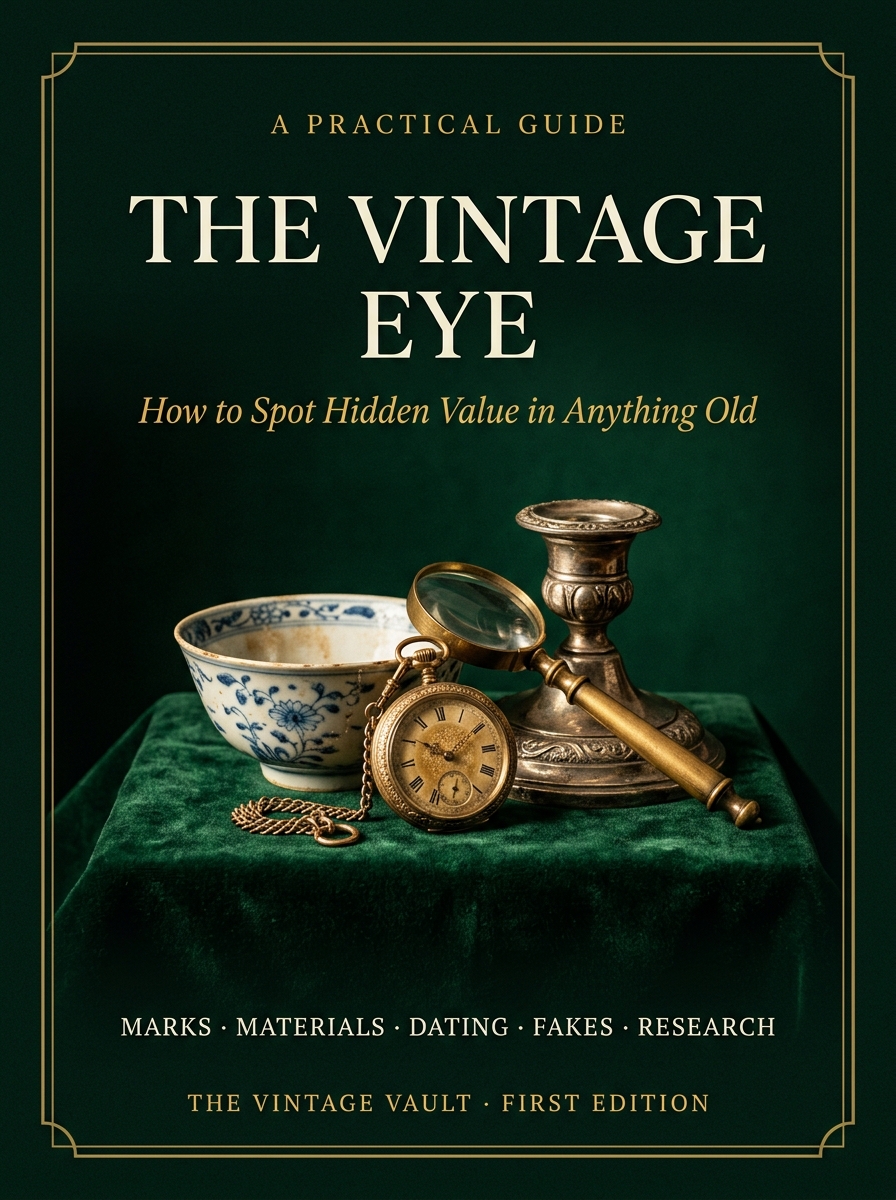
You are not going to find a million-dollar bowl. Neither am I. But that story matters because of what it reveals about how value hides — and why one person in the room saw it while everyone else walked past. This guide teaches you to be that person.
In 2014, a man in Connecticut bought a Chinese bowl at a yard sale for three dollars. It was dusty, chipped at the rim, sitting between a broken blender and a stack of Reader's Digest.
He bought it because something about the glaze felt old in a way he couldn't articulate. A few months later, Sotheby's sold that bowl for $2.2 million.
That bowl sat in a yard sale because nobody in the family knew what it was. Nobody at the yard sale knew either — except one person who'd trained himself to pause when something looked old and unusual, and to ask the right questions instead of walking past.
Let's be honest upfront: most old things are worth very little. But the reason most people never find valuable items isn't that valuable items are rare. It's that most people can't tell a reproduction from a genuine antique, plated brass from solid gold, or department-store glass from handblown crystal.
Whether it's a watch, a ring, a teacup, a pair of sunglasses, a chair, or a dusty oil painting — the evaluation is the same. Learn the thinking once and you can walk into any room full of old objects and have a conversation with them.
What is it actually made of? Material sets the floor price.
Is there a name, mark, stamp or label? Identified makers command premiums.
Style, construction and materials all leave date-able fingerprints.
Genuine, reproduction, fake — or a marriage of mismatched parts?
Does anyone actually want it, and what have they recently paid?
Notice what's not on the list: beauty, personal taste, emotional attachment. The market doesn't care what you think of an object.
Not expert-level certification in any single category — that takes years. A reliable, portable framework for evaluating anything old enough to be interesting.
Why value hides in plain sight — and the pause that changes everything.
Hallmarks, stamps, signatures and mold numbers — reading what objects say about themselves.
What it's made of, and why that's always the first question. 925, 585, 750 decoded.
How to read an object's era even when there's no mark at all.
Spotting reproductions, forgeries, marriages and honest mistakes.
Where the real money hides — and the expert-dominated categories to avoid.
Finding the real price of anything. Sold listings, visual search, specialist databases.
Choosing the right venue and never accepting the first confident offer.
A weekend routine that sharpens your eye faster than any single book can.
Where the line sits between a good deal and taking advantage.
Final thoughts — plus a full resources and further-reading section.
Don't chase fine art, rare coins, or high-end antique furniture — expert-dominated categories where genuine bargains are vanishingly rare. The categories that pay educated hunters are where supply still exceeds expert attention.
The single most reliable find. Tarnish reads as "old and worthless" to untrained eyes — but the floor is always the silver weight.
The sweet spot between expert territory and casual access. A mechanical watch in a gold-filled case for $15 is almost always worth the gamble.
Twenty years of growth and still climbing. Unmarked pieces sell strongly on design merit alone if the lines and joinery are right.
Trifari, Eisenberg, Haskell, Schiaparelli. Names sell for multiples of what the materials justify — and estate boxes are full of them.
Vintage eyewear, barware, quality textiles, precision tools. Routinely underpriced, and almost nobody else is looking.
Asking prices are wishes. Sold prices are facts. Chapter seven shows you exactly where to find them.
Instant PDF download · Read on any device · 30-day money-back guarantee
"I read chapter two on a Friday and found a sterling tray at a car boot sale on the Sunday for £6. It was Georg Jensen. I still can't quite believe it worked that fast."
"The sold-listings versus asking-price bit alone was worth it. I'd been valuing my whole collection off fantasy numbers and had no idea."
"What I like is that it's honest. It tells you most old things aren't worth much, then shows you exactly where the exceptions live. No hype."
"I now turn everything over before I look at the front. My partner finds it deeply annoying. I've made about £900 since March."
Take 30 days. Read the whole thing. Take it to a flea market, an estate sale, or your own attic. If it doesn't leave you genuinely better at spotting what's worth a second look — email us and we'll refund you in full. No questions, no friction. The risk is ours.
The items are out there. They always were. The only thing standing between you and them is knowing how to look.
A tarnished sterling tray. A gold-filled watch for $15. A signed brooch nobody checked. They're sitting in sales near you this weekend — the only question is whether you'll recognise them. 11 chapters, 30-day refund if it's not for you.
Get The Vintage Eye · $25 →